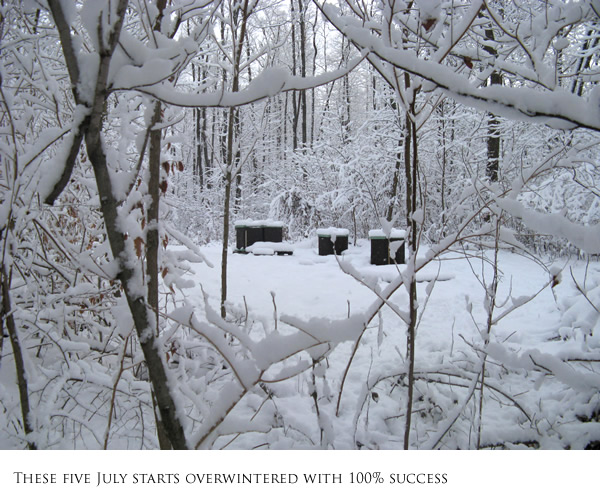
Notice: Any chemical spraying during the autumn season is particularly harmful to honeybee colonies who are preparing to overwinter. Spray contaminates the saps and resins in the trees which honeybees uptake during this time of year. Sap is not water-soluble and captures contaminants. Moreover, honeybees uptake minerals from soil during this time of year which can become contaminated by sprays or spray drift.
Honey Beekeeping Strategies from Mel Disselkoen
Read Mel’s OTS Queen Rearing: A Survival Guide for Beekeepers Worldwide
Whether you are looking for beekeeping advice for beginners or you are a veteran beekeeper, Mel Disselkoen shares his modern beekeeping survival strategies in his acclaimed beekeeping guide, OTS Queen Rearing: A Survival Guide for Beekeepers Worldwide, which is available for purchase here. Mel says anyone can implement his OTS Queen Rearing method and, barring extenuating circumstances, will never have to buy bees again.
Honey beekeepers will also benefit from utilizing Mel’s MDA Splitter Nuc Boxes, which are used for a variety of purposes from nuc transport to isolating queens and brood. You can learn more about MDA Splitter Nuc boxes or purchase them here.
Mel Disselkoen and The International Mating Nuc, Inc. appreciate your interest in beekeeping. Enjoy browsing this website for Mel’s free research articles and presentations on the topics of beekeeping management strategies and natural, gentle, queen-rearing techniques designed for colony survival, colony increase, and overall beekeeping success. Feel free to contact Mel with any questions.
Purchase Mel's Book |
Browse Mel's past presentations about natural, gentle, colony-rearing techniques designed for colony survival, colony increase, and beekeeper success:
OTS Queen Rearing Acknowledgements
March 2025 (Download PDF File)
OTS Queen Rearing Research Findings Since 2016
August 2024 (Download PDF File)
Field Day Report 2019-2020
April 1, 2020 (Download PDF File)
Frequently Asked Questions 2019
October 1, 2019 (Download PDF File)
Mel's Exceptions to the OTS Guidelines
Summer Solstice 2018 (Download PDF File)
OTS Seasonal Summary 2017
Winter Solstice 2017 (Download PDF file)
Field Day Report 2017
May-July 2017 (Download PDF file)
OTS 2016 Seasonal Summary
Autumnal Equinox 2016 (Download PDF file)
Helpful Hints for Notching
Vernal Equinox 2015 (Download PDF file)
Message to OTS Queen Rearers
Autumnal Equinox 2014 (Download PDF file)
2013-2014 Winter Survival Update
(Download PDF file)
OTS Queen Rearing Corrections
(Download PDF file)
OTS is Queen Rearing Music Played by Ear: New Concepts Drawn by Listening to Wise Ways of Old
Hendersonville, North Carolina
June 29th, 2013 (Download PDF file)
Queen Rearing Without Grafting and Miticide-Free
Indiana Beekeepers Association Turkey Run Convention
Autumnal Equinox 2011
Download PDF: Part I, Part II, Part III, Part IV, Part V
OTS Research Report
Vernal Equinox 2011 (Download PDF file)
OTS: Honeybee Husbandry Mating Moments
Winter-Spring 2011 presentations to Western Pennsylvania Beekeeping Seminar, Indiana Bee School, Michigan Beekeepers Association
Download PDF: Part I, Part II
July Starts in Progress: What to Expect Come Fall, Presentation to the Holland Area Beekeepers Association
September 21st, 2010 (Download PDF file)
Update from Mel
May 8th, 2010 (Download PDF file)
2010 Spring Splits Part Two
May 1st-8th, 2010 (Download PDF file)
2010 Spring Splits Part One
May 1st-8th, 2010 (Download PDF file)
Going North: Powerbeekeeping in Pennsylvania, Western Pennsylvania Beekeeping Seminar
February 19-20, 2010
Download PDF: Part I, Part II, Part III
Going North: Presentations to the Indiana Beekeepers Association
November 7th, 2009
Download PDF: Part I, Part II, Part III, Part IV, Part V
Mel Disselkoen Field Days: Colony Rearing for Survival
September 2009 (Download PDF file)
Artificial Supersedure: A Beekeeper's Strategy for Leveraging the Honeybee's Built-In Survival Mechanism to Overcome Varroa
July 2009 (Download PDF file)
Frequently Asked Questions About On-The-Spot Queen Rearing
April 2009 (Download PDF file)
On-The-Spot Queen Rearing Utilizes Simple Techniques To Direct Your Colonies To Rear Their Own, Quality Queens Without Grafting
February 2009 (Download PDF file)
Achieve Productive Honey and Pollination Hives without Medication through Flexible and Cost-Effective Nuc Management
January 2009 (Download PDF file) |
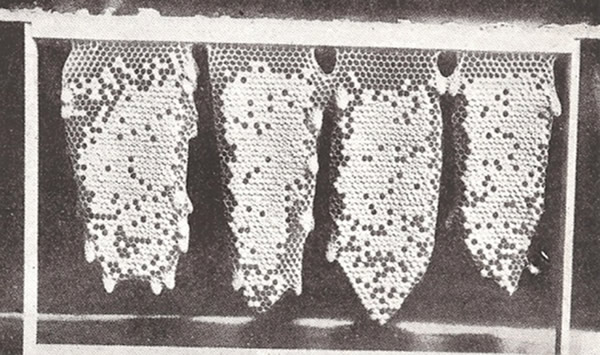
DR. C. C. MILLER: "Give them larvae of all ages from which to select, and they always choose that which is two days old, or younger . . . . . I have never known bees to start a cell after the larvae were too old."
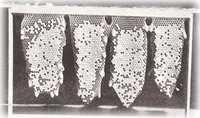
Source: Quote: Fifty Years Among The Bees (pages 237-238); Photo: Frank C. Pellett's Practical Queen Rearing used with permission from Dadant and Sons'
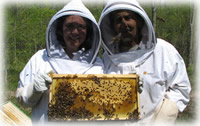
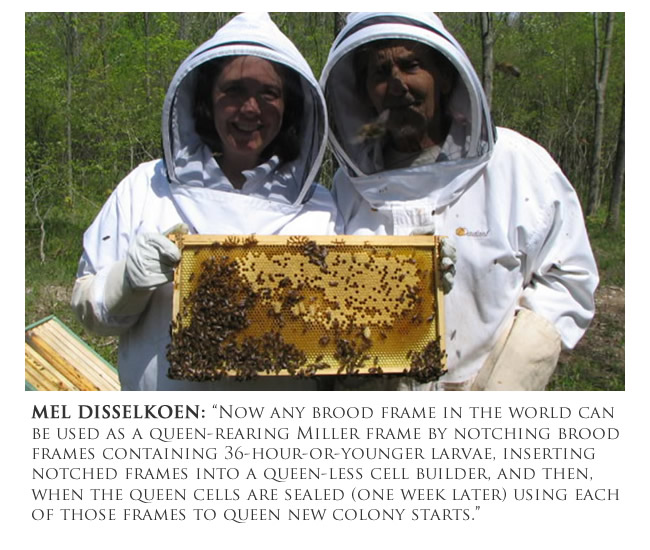
MEL DISSELKOEN: "Now any brood frame in the world can be used as a queen-rearing Miller frame by notching brood frames containing 36-hour-or-younger larvae, inserting notched frames into a queen-less cell builder, and then, when the queen cells are sealed (one week later) using each of those frames to queen new colony starts."
Overwintering Success

|